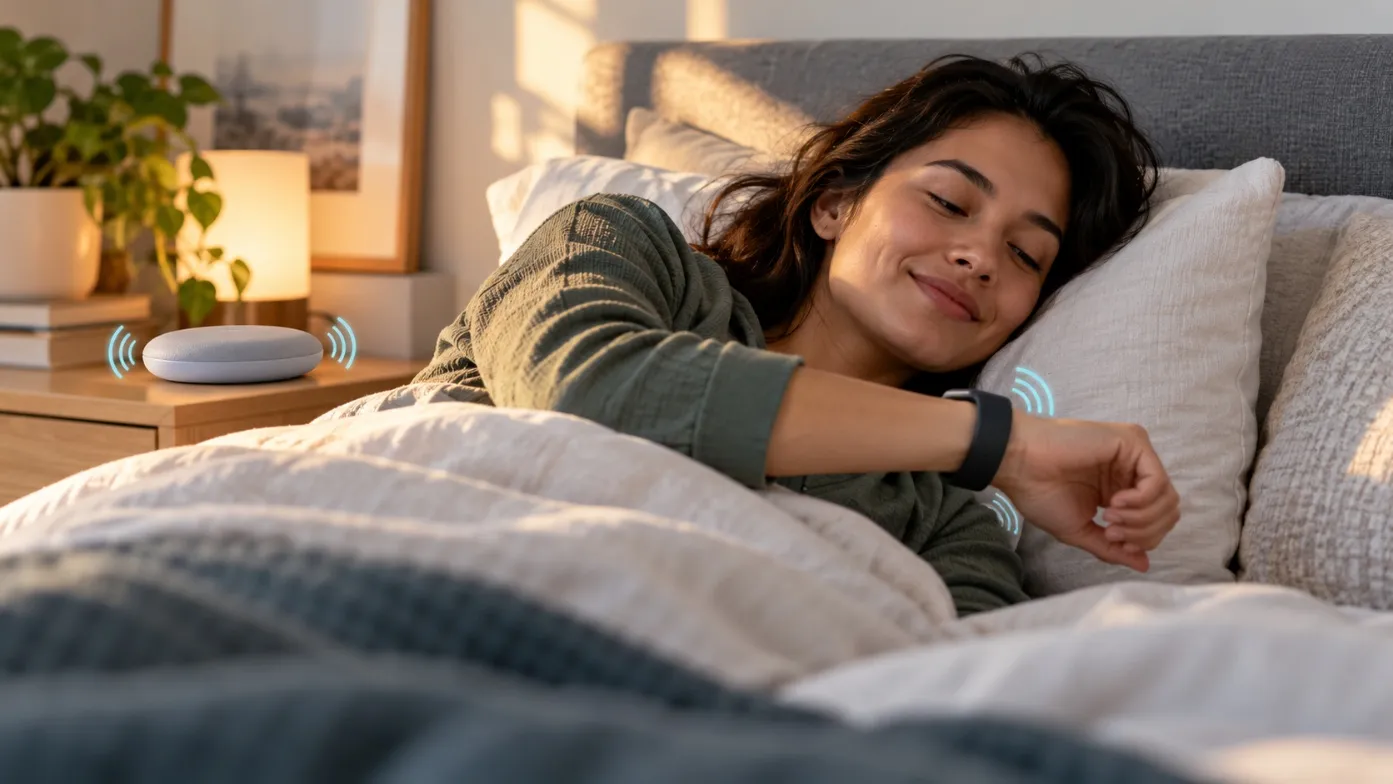
Standard alarms assume that everyone can hear them. For people who are deaf or hard of hearing, that assumption turns an ordinary morning routine into a source of low-level stress and uncertainty.
Relying on a family member to wake you, or sleeping lightly out of worry, takes a real toll over time. True independence starts with a wake-up method that you can trust completely, every single day.
How the Body Responds to Vibration
Touch travels quickly to the brain, and the wrist is one of the most sensitive spots for subtle signals. A steady pulse is hard to miss, even when you are lost in deep sleep.
This is why vibration has long been used in accessibility tools. It turns a missing sense into a dependable cue, with no volume required and no need for anyone else in the house to be involved. Many users describe the feeling as clear and calm rather than jarring.
A Wearable Alternative to Bedside Devices
Bed shakers and flashing lamps are common choices, but they stay on the nightstand. Travel, camping or sleeping in an unfamiliar place can leave you without them, which is exactly when waking on time matters most. Missing a flight or an early meeting because of an unfamiliar room is a worry nobody needs.
A vibrating alarm wristband goes wherever you go. Because it sits on your arm, the alert reaches you whichever side of the bed you sleep on, and it fits easily into a small travel bag.
Features Worth Looking For
Look for adjustable intensity. A light pulse suits some sleepers, while others need something firmer that builds up gradually, so a device offering several levels gives you room to find your own comfortable setting.
Battery life matters as much as strength. A band that runs for days between charges is far more trustworthy than one you must top up every night, particularly if you travel often or forget small chores.
Simple Controls Make a Big Difference
Setting an alarm should never feel like a puzzle. Physical buttons and a clear display let you check the time and adjust a wake-up within seconds, even when you are tired or half asleep.
Avoiding extra apps also reduces points of failure. Fewer connections mean fewer moments where an alarm might silently fail overnight, and fewer updates or settings that could change without you noticing it.
Comfort and Fit for Overnight Wear
A band you wear all night should feel soft and lightweight. Textured or breathable straps help prevent irritation, especially in warm weather, and a low profile keeps it from catching on sheets or pyjama sleeves.
Try wearing it on your non-dominant wrist and snug enough that it will not slide around. A steady position means the vibration always lands in the same spot, which makes it easier for your body to recognise.
Benefits for the Whole Household
Vibrating alerts do not disturb others, so a hearing partner can sleep soundly while you wake on schedule. A family can follow different routines without alarm clashes or awkward negotiations about whose turn it is.
Hearing people benefit as well. Teenagers, light sleepers and anyone who dislikes a harsh ringtone can enjoy gentler mornings using exactly the same technology, which shows that good accessibility design often helps everyone.
Travel, Hotels and Unfamiliar Rooms
Staying away from home can feel risky when you rely on a particular wake-up routine. Hotel alarms are loud by design and rarely come with any alternative, which can leave you guessing.
Carrying your own device removes that stress. You can pack it with your charger, set it before bed and trust that the same familiar signal will reach you in any room, anywhere.
Talking With Employers and Schools
Reliable mornings support punctuality, and that matters at work or in class. If lateness has been a concern, explaining your wake-up method can help colleagues and teachers understand the effort you put in.
Small adjustments often make the difference. Flexible start times, clear communication and a wake-up tool you trust all work together to remove barriers that should never have existed in the first place.
Conclusion: Confidence From the First Alarm
A dependable wake-up method gives you control over your day. Touch-based alerts remove the guesswork, so you can rest without wondering whether you will wake on time.
Makers such as Sovune build their bands around this simple, private signal. Pick a design that suits your needs, and let each morning begin on your own terms. Small choices like this build confidence that carries well beyond the bedroom.