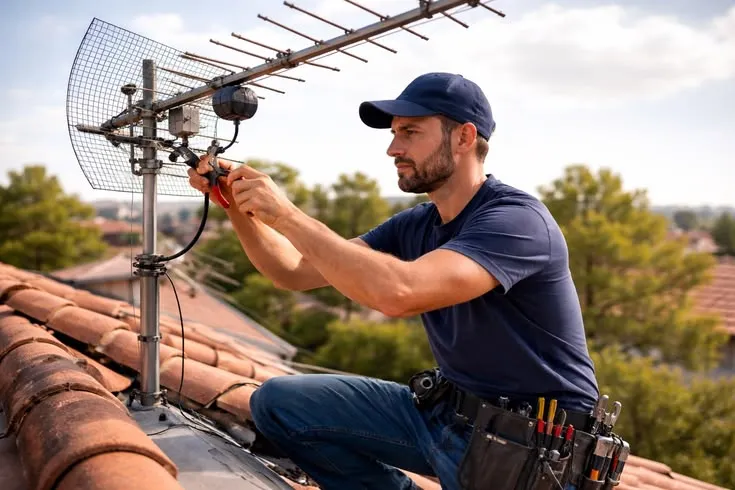
Television reception can deteriorate even when nobody has touched the aerial, dish or television. A tree that grows across a signal path, a new extension next door or scaffolding outside a window may change conditions that previously worked well. The result can be frustrating: channels disappear, pictures break into blocks or service becomes unreliable at particular times. Rather than immediately buying another receiver, households should investigate what has changed around the property and whether a safe adjustment could restore dependable viewing.
Look for Changes Beyond the Television
Begin by asking when the problem started. Did reception worsen after nearby construction work, seasonal leaf growth or a storm? Does it affect every room or just one screen? These observations help separate an obstruction problem from faults involving connectors, cables or recording equipment.
An aerial receives broadcasts from a terrestrial transmitter, while a satellite dish needs an unobstructed view towards the relevant satellites. Both depend on location, but they respond to surroundings differently. A clear pathway for one service does not guarantee suitable reception for the other.
Why Trees Are a Moving Obstacle
A small tree planted years ago may now stand directly in the path of a satellite dish. Branches can also move in strong winds, producing intermittent disruption. Seasonal growth can make the issue more noticeable during summer, when leaves are dense, than during winter.
Cutting down a tree should never be the automatic response. First establish whether its position genuinely affects the signal, whether the equipment could be relocated safely and whether permission is needed for tree work. Protected trees and conservation-area rules may limit what can be altered.
Assess Satellite Positioning Before Replacing Equipment
Satellite dishes require careful alignment and secure mounting. If neighbouring building work blocks the existing view, a different mounting position may be possible, but moving equipment can introduce new cable routes and fixing requirements. Changes should be assessed by someone competent to work at height.
When considering Sky satellite dish installation, explain nearby obstructions and any recent changes to the property. A survey should consider the line of sight, mounting surface and compatibility of the intended receiving equipment. Repositioning a usable dish may be preferable to replacing it, although the best solution depends on the condition of the whole setup.
Check the Less Obvious Causes
An obstruction is only one possible explanation for signal loss. Before drawing conclusions, make a few practical observations:
- Check whether the same channels fail on every television.
- Note whether interruptions follow wind, rain or nearby construction activity.
- Look for visibly loose or damaged accessible cables.
- Ask neighbours whether they have noticed similar reception problems.
- Identify any recent changes to splitters or indoor connections.
- Avoid repeatedly retuning when the incoming signal is unstable.
These checks provide useful information without encouraging unsafe work on rooftops, electrical fittings or shared building infrastructure.
Consider the Terrestrial Reception Alternative
Where satellite positioning has become difficult, it may be sensible to establish whether terrestrial reception meets the household’s needs. Available Freeview channels depend on the local transmitter and coverage conditions, so a postcode prediction is a starting point rather than a guarantee.
Consulting Local TV aerial installers can help determine whether a suitable aerial position exists and whether existing cables can be reused. However, moving from satellite to terrestrial television may change the channels available and the equipment required. The decision should reflect actual viewing preferences, not simply the ease of fitting a new aerial.
Coordinate Reception Work With Building Projects
If an extension, roof replacement or major landscaping project is planned, discuss television reception before construction begins. Builders may need temporary access to external walls, and scaffolding can interfere with signals even if the permanent structure will not. Identifying cable routes early also reduces the risk of accidental damage.
Take photographs of the original equipment positions and record any interruptions during the work. Afterwards, test the channels the household regularly watches instead of relying on one brief picture check. That small step can reveal a problem while the details of the project are still fresh.
Conclusion
When television reception deteriorates after a tree grows taller or a neighbouring extension is completed, the obvious solution may not be the correct one. Understanding how the surrounding environment affects signal paths can prevent unnecessary equipment replacement. Careful observation, suitable positioning and technical testing should guide decisions about alterations. techtwins.co.uk offers information about aerial and satellite installation services relevant to these situations. Identifying the environmental cause of reception problems is often more productive than repeatedly changing equipment inside the home.