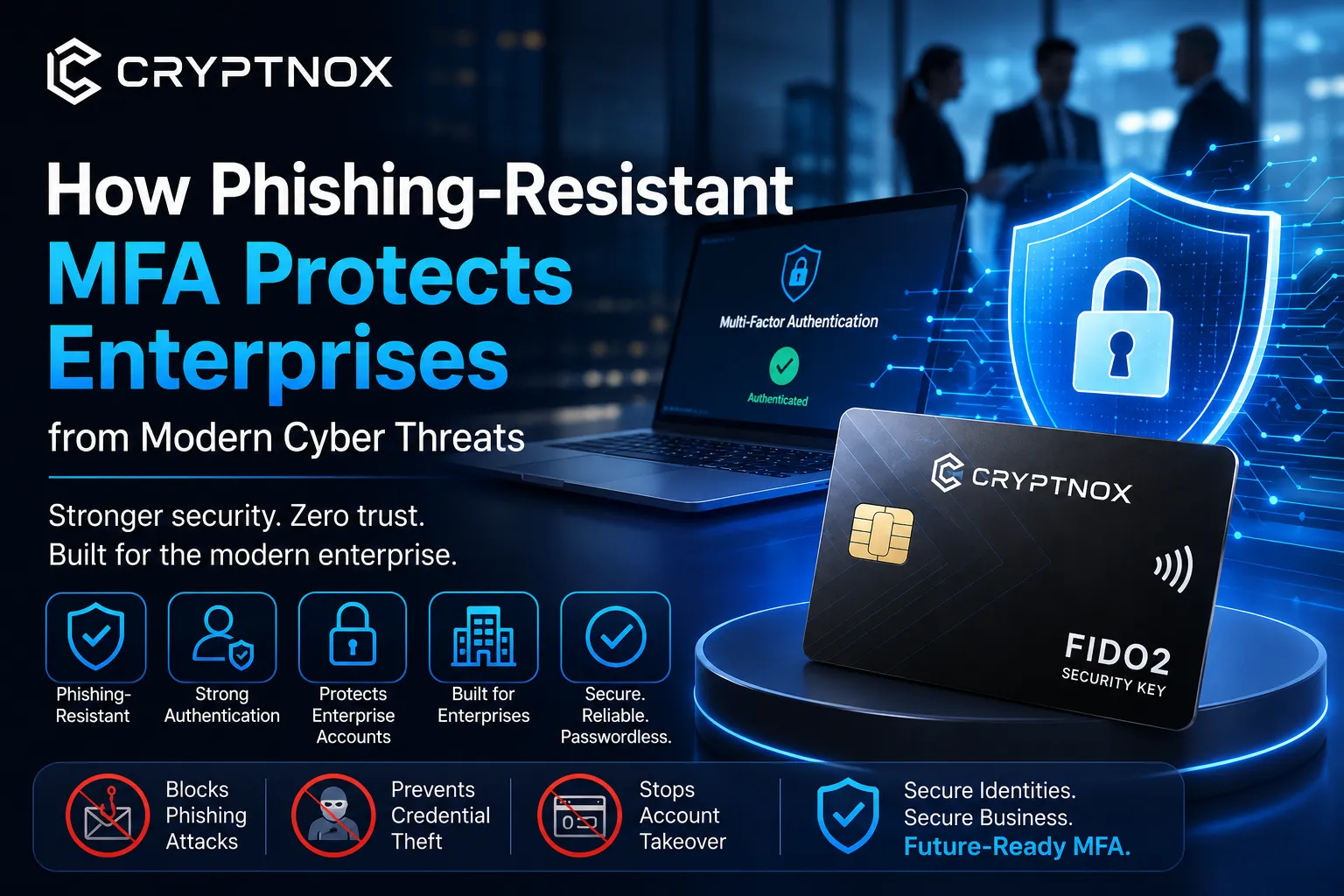
Cyberattacks are becoming increasingly sophisticated, with phishing remaining one of the most effective methods attackers use to compromise corporate accounts. Traditional multi-factor authentication (MFA), while significantly better than passwords alone, can still be vulnerable to credential theft, social engineering, and man-in-the-middle attacks. As organizations accelerate digital transformation and adopt cloud-based applications, they need authentication methods that can withstand modern attack techniques. This is where phishing-resistant MFA plays a critical role. Built on FIDO2 and WebAuthn standards, phishing-resistant authentication verifies user identity using cryptographic credentials rather than shared secrets, making it far more difficult for attackers to steal or misuse login information. Understanding how this technology works can help enterprises strengthen security while improving the user authentication experience.
What Is Phishing-Resistant MFA?
Phishing-resistant MFA is an authentication approach specifically designed to prevent users from unknowingly providing authentication credentials to malicious websites or attackers. Unlike one-time passwords (OTPs), SMS verification codes, or authentication apps that rely on shared secrets, phishing-resistant MFA uses public-key cryptography.
When a user registers a security device, a unique cryptographic key pair is created. The private key remains securely stored on the authentication device, while the public key is registered with the online service. During login, the service sends a cryptographic challenge that only the legitimate device can sign.
Because the private key never leaves the device and is bound to the legitimate website, attackers cannot steal reusable credentials or trick users into authenticating on fake websites.
Organizations implementing phishing-resistant MFA gain protection against credential harvesting, session hijacking, and many common phishing techniques.
Why Traditional MFA Is No Longer Enough
Traditional MFA methods have significantly improved account security, but cybercriminals have adapted their techniques.
Attackers commonly exploit:
- SMS interception attacks
- SIM swapping
- Real-time phishing proxies
- OTP theft
- Push notification fatigue attacks
- Social engineering
These attacks often bypass authentication methods that rely on temporary codes or user approval prompts.
Phishing-resistant authentication eliminates these weaknesses by ensuring authentication requests are cryptographically verified against the legitimate domain.
Since authentication depends on possession of the registered cryptographic credential—not knowledge of a code—it becomes dramatically harder for attackers to compromise enterprise accounts.
How FIDO2 Improves Enterprise Authentication
The FIDO2 standard combines WebAuthn and CTAP protocols to create passwordless and phishing-resistant authentication.
A FIDO2 security key securely stores cryptographic credentials inside tamper-resistant hardware. During authentication, the device verifies the requesting website before digitally signing the authentication request.
This process offers several advantages:
- Eliminates password reuse.
- Protects against phishing websites.
- Prevents credential replay attacks.
- Simplifies user authentication.
- Supports passwordless login experiences.
- Reduces helpdesk costs related to password resets.
For enterprises adopting Zero Trust security architectures, FIDO2 provides a strong foundation for secure identity verification.
Benefits of Phishing-Resistant MFA for Enterprises
Stronger Protection Against Credential Theft
Most successful cyberattacks begin with stolen credentials.
Phishing-resistant MFA ensures attackers cannot reuse intercepted passwords or authentication codes because every authentication request is cryptographically validated.
Improved Compliance
Many cybersecurity frameworks now recommend or require phishing-resistant authentication for privileged accounts.
Organizations implementing enterprise MFA solutions based on FIDO2 can strengthen compliance with modern security guidelines while reducing organizational risk.
Better User Experience
Complex passwords and constantly changing authentication codes create friction for employees.
Using hardware-backed authentication enables users to log in quickly while maintaining high security standards.
Employees simply authenticate using their registered security key without memorizing lengthy passwords or waiting for verification codes.
Reduced IT Costs
Password resets remain one of the largest contributors to IT helpdesk requests.
Passwordless authentication significantly reduces support costs while improving employee productivity.
Why Hardware Security Matters
Hardware-backed authentication provides stronger protection than software-only authentication methods.
A dedicated phishing-resistant MFA card securely stores private keys inside tamper-resistant secure elements designed to prevent extraction or unauthorized access.
Unlike software credentials that may be exposed through malware or compromised devices, hardware security keys isolate cryptographic operations from the operating system.
This layered security model makes them particularly suitable for enterprises protecting sensitive business applications, financial systems, cloud services, and administrative accounts.
Enterprise Use Cases
Phishing-resistant MFA is valuable across many industries and environments.
Common enterprise deployments include:
- Microsoft Entra authentication
- Google Workspace login protection
- Privileged administrator access
- Remote workforce authentication
- Government identity systems
- Financial institutions
- Healthcare organizations
- Educational institutions
- Managed service providers (MSPs)
As organizations continue migrating critical workloads to the cloud, hardware-backed authentication becomes increasingly important for protecting sensitive identities.
Best Practices for Enterprise Deployment
To maximize security benefits, organizations should follow several best practices:
- Deploy FIDO2 authentication for privileged users first.
- Train employees to recognize phishing attempts.
- Combine phishing-resistant MFA with Zero Trust security principles.
- Maintain secure device lifecycle management.
- Establish backup authentication procedures.
- Regularly review authentication policies.
Organizations should also evaluate authentication hardware that supports enterprise-scale deployment, centralized management, and long-term durability.
The Future of Enterprise Authentication
Cybersecurity continues to evolve as attackers develop increasingly sophisticated phishing techniques. Passwords and OTP-based authentication alone are no longer sufficient to protect enterprise identities.
Industry adoption of WebAuthn, FIDO2, passwordless authentication, and hardware-backed credentials continues to accelerate because these technologies directly address the weaknesses attackers routinely exploit.
As digital identity becomes more important across enterprise environments, phishing-resistant authentication will become the standard for securing users, devices, and critical business systems.
Conclusion
Modern cyber threats require authentication methods that go beyond passwords and traditional MFA. enterprise MFA built on FIDO2 standards delivers strong protection against phishing, credential theft, and account compromise while improving the user experience. By leveraging hardware-backed cryptographic authentication, organizations can reduce security risks, simplify password management, and strengthen compliance with evolving cybersecurity requirements. As enterprises continue adopting cloud services, Zero Trust architectures, and passwordless authentication strategies, implementing phishing-resistant MFA is becoming an essential investment for protecting digital identities and maintaining long-term organizational resilience.