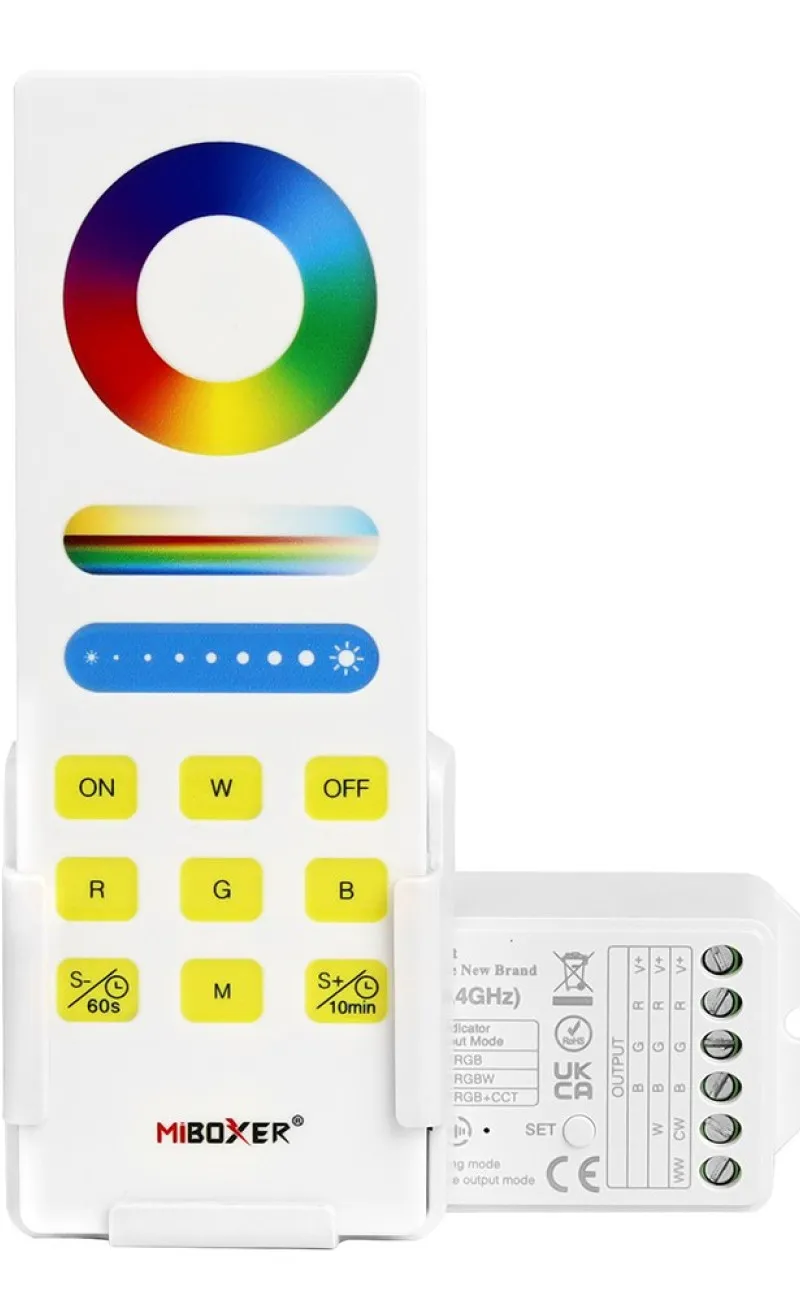
LED lights come in flexible options that can offer a lot more than a simple on-and-off, light-and-dark output. Projects that require multiple colors, brightness adjustments, or various lighting scenes require an appropriate control system to control the output. This is particularly important in the hospitality, retail, entertainment, residential and architectural environments. When the system is installed, the right controller must be selected, which requires the selection of the configuration of the LED strip, the way of control, the size of installation, and the light effect before installation.
Understand the RGBW Setup
RGBW lights are composed of red, green and blue LED lights and a dedicated white channel. Through this system, it not only enables colored lighting to be produced as a user’s wish, but also generates more functional white light.
An RGBW Controller must be compatible with the strip type, configuration and electrical requirements. When selecting one, be sure to review the strip voltage, number of channels, current needs, and connection features.
It is also important to find out if the installation requires manual control or advanced programming. Depending on the size of the installation, a simple color selection and dimming system may be sufficient for a small, decorative application, but for a commercial application, it might be necessary to set up scenes or central control.
Match the Controller
All components must be compatible with the controller before purchase. The controller should be capable of handling the voltage and electrical load of the lighting that is connected to it.
For locations where there is a need for moisture protection, a Waterproof RGBW Strip can be used, but the protective structure of the strip does not mean that all of the controllers are also suitable for the locations. The installation conditions and protection of the controller shall be suitable.
For outdoor or damp applications, think about the location of the controller, power supply and connections. Sensitive electrical components can be kept in a suitable protected location, making installation and maintenance easier.
Calculate the Electrical Load
The overall lighting load will be based on strip length and power consumption. Estimate the total current for the full installation to determine the controller.
Longer systems might require more than one section, amplifier or separate power connection depending on the capacity of the controller. If a large lighting installation is required and a controller is used that is no match for the load, then performance problems can occur.
Always be sure to read the manufacturer’s maximum load specification. If multiple lighting zones are involved in an installation, determine the lighting zone requirements on an individual basis and design the control scheme based on the lighting zone requirements.
Consider Color Performance
The RGBW systems are versatile since the RGB system can duplicate color effects and a separate white light output can be achieved. The outcome, however, will rely on the quality and features of the LED strip.
Consider color schemes for use in the space. A warm decorative scene might be needed in a restaurant, but a brighter white lighting effect might be warranted in a retail display during operating hours. Multiple program settings can be programmed to suit various times of the day in the hospital environment.
The controller is supposed to be able to make these adjustments in a realistic manner for the users who will be using the system. When a simple choice of different scenes is adequate, complicated controls may be of little value.
Plan Control Methods
There are various methods for lighting with LEDs for different projects. Wall-mounted controls may be appropriate for more permanent installations; remote or wireless controls may be more suitable for more flexible spaces.
Centralized control can enable multiple areas to be controlled for larger projects. Define the system requirements: Independent zones, synchronized lighting, dimming, color adjustment and preset scenes.
Also take into account the location of the control interface. An easy-to-access, easy-to-understand system is easier to use in everyday life.
Think About Power Distribution
The controller is just one component of the electrical system. All power supplies, wiring, connectors and LED strips must function as a team.
For large RGBW installations, more than one power injection point might be needed to give the same output. The way the wiring is laid out should be based on the strip’s voltage, power requirements, distance from cables and manufacturer’s recommendations.
Ensure there are no tangled or unmarked power connections – particularly for multiple channels. Appropriate labeling can save a lot of time while troubleshooting or maintenance.
Consider Installation Conditions
The layout of the environment should be a determinant of the placement of components. Indoor installations are more flexible, whereas outdoor or damp environments need more consideration for moisture exposure and protection.
The LED strip may be rated for harsh conditions, but the controller and power supply may require a dry, well-ventilated space where they are easily accessible. Care also needs to be taken to prevent unnecessary exposure of cable entry points.
For commercial projects, consider access for maintenance from the start, not after installed surfaces are closed!
Conclusion
A comprehensive test of the entire system can uncover any compatibility problems at an early stage. Install the strip and connect it to the controller, power supply, and control interface and test each color channel individually. Try the brightness adjustments, color, programmed scenes, and, if the system has any wireless features, test those. For longer installations, make sure that all parts have even output too.
A brief test is especially useful for the case of custom wiring or when multiple zones are used. It can be used by installers to correct connections before it is too late to access finished ceilings, cabinets or architectural surfaces. The selection of LED strips, the power distribution system, and the controls are crucial in an RGBW system, all of which should be carefully planned and selected to meet the needs of the project. Flexible lighting components can be compared with professionals at richeelighting.com, where they can find products that can be used for different types of RGBW and architectural lighting.