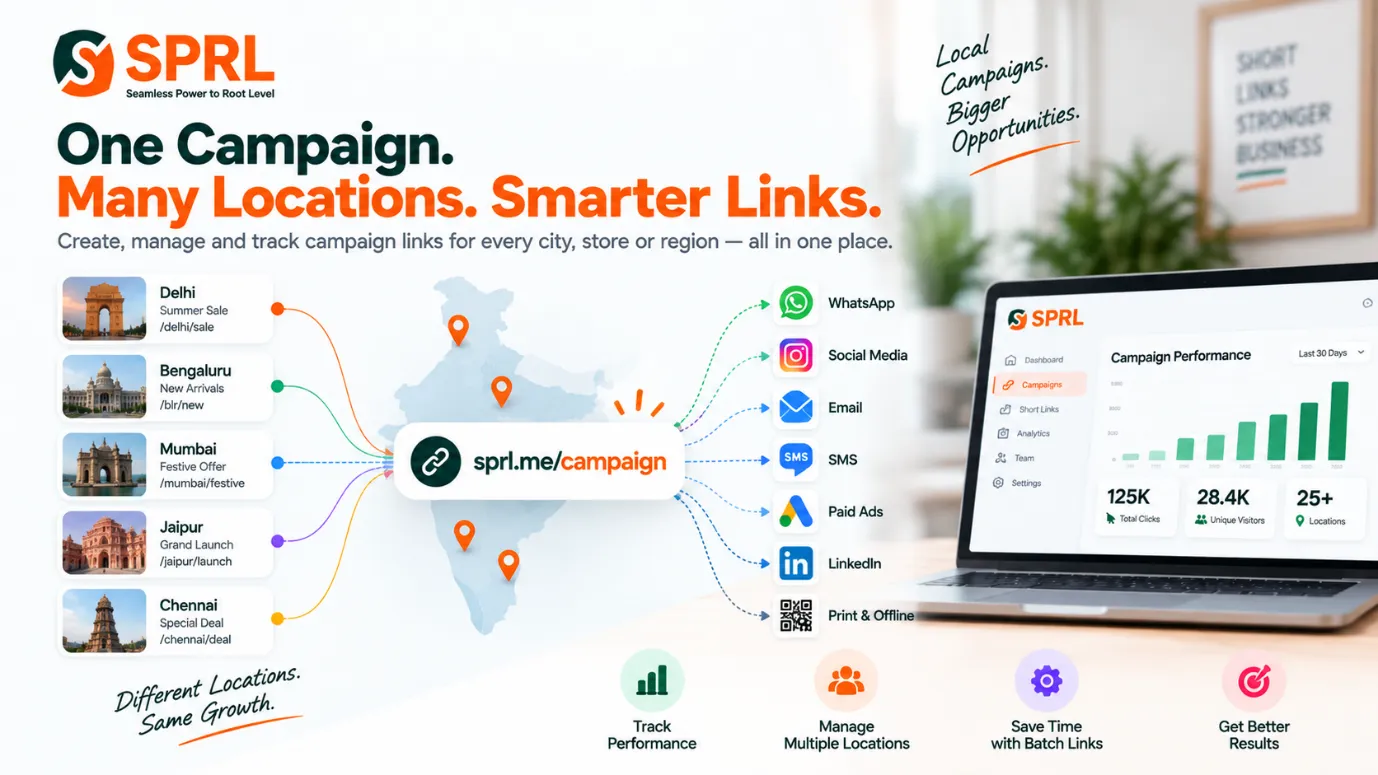
A campaign that looks simple at the national level can become complicated when it is adapted for different cities, stores, sales teams, or local offers. Each variation may need its own landing page, tracking parameters, and distribution channel.
A link shortener can help teams create cleaner campaign links while keeping destinations easier to organise. The benefit becomes especially clear when multiple people are sharing different versions of the same campaign across email, social media, messaging apps, and offline materials.
Build a Naming System Before Creating Links
Regional campaigns are easier to manage when every link follows a consistent naming convention. Teams can include a city, campaign code, channel, or month in the internal label so that the purpose of each URL remains clear.
This small step reduces confusion later. Without a naming system, links created for Jaipur, Bengaluru, Delhi, or other markets may look almost identical in a dashboard, making reporting and updates unnecessarily difficult.
Separate Destination Planning From Link Creation
Before shortening anything, marketers should confirm where each audience needs to land. A campaign may direct customers to different store pages, local offers, event registrations, or language-specific content depending on the region.
Preparing destinations first also helps catch broken pages and duplicate URLs. Once the source list is clean, the shortening process becomes more efficient, and the team is less likely to distribute a link that points to the wrong location.
Use Batch Processing for Repetitive Work
Creating dozens or hundreds of links one by one can consume time that should be spent on campaign planning. The problem becomes larger when every regional destination also needs tracking parameters or a custom naming pattern.
A batch URL shortener can help process a prepared list in one workflow. For campaigns with many destinations, spreadsheet-based creation can reduce repetitive manual work while making it easier to keep source URLs and generated links together for review.
Keep Tracking Rules Consistent
Campaign measurement becomes harder when each person builds tracking parameters differently. One team member may abbreviate a channel name while another writes it in full, producing fragmented reporting even when both links support the same campaign.
A shared UTM structure can prevent this. Agreeing on campaign, source, medium, and regional naming before links are created gives analytics teams cleaner data and makes comparisons between locations or channels more meaningful.
Think About the Channel Where the Link Appears
The same campaign may be promoted through SMS, WhatsApp, email, social media, posters, or printed cards. Each channel places different demands on link length, appearance, and surrounding message.
A compact URL is especially useful where space is limited, but clarity still matters. The message around the link should explain what the customer will see after clicking so that shortening does not remove important context.
Give Local Teams Enough Control
Central marketing teams often want consistency, while regional teams need flexibility for local offers and events. A good link workflow should support both needs instead of forcing every request through an informal spreadsheet or chat thread.
Clear rules can define which elements are fixed and which can vary. For example, the domain, tracking format, and naming convention may stay consistent while destinations and local campaign labels change according to the market.
Review Links While the Campaign Is Active
Regional campaigns can change quickly. A store event may be rescheduled, a landing page may be updated, or a local offer may end earlier than expected. Links should therefore be reviewed during the campaign, not only after it finishes.
Teams can monitor active URLs, check destinations, and confirm that the correct versions are being shared. This is particularly useful when several local teams are publishing content at the same time.
Archive Campaigns Cleanly
Once a campaign ends, marketers should decide which links remain useful. Evergreen pages may stay active, while expired event or promotional links may need to be redirected, disabled, or clearly documented as inactive.
Maintaining an archive also helps future planning. Teams can see which naming patterns worked, which channels generated engagement, and how many regional link variations were actually needed before launching a similar campaign again.
Conclusion
Multi-location marketing creates operational complexity long before a customer clicks a link. Clear destination planning, consistent naming, structured tracking, and batch processing can keep regional campaigns easier to coordinate as the number of URLs grows.
The goal is not simply to create shorter addresses. A well-managed link workflow gives central and local teams a shared system for creating, distributing, reviewing, and retiring campaign links without losing control as marketing activity expands.