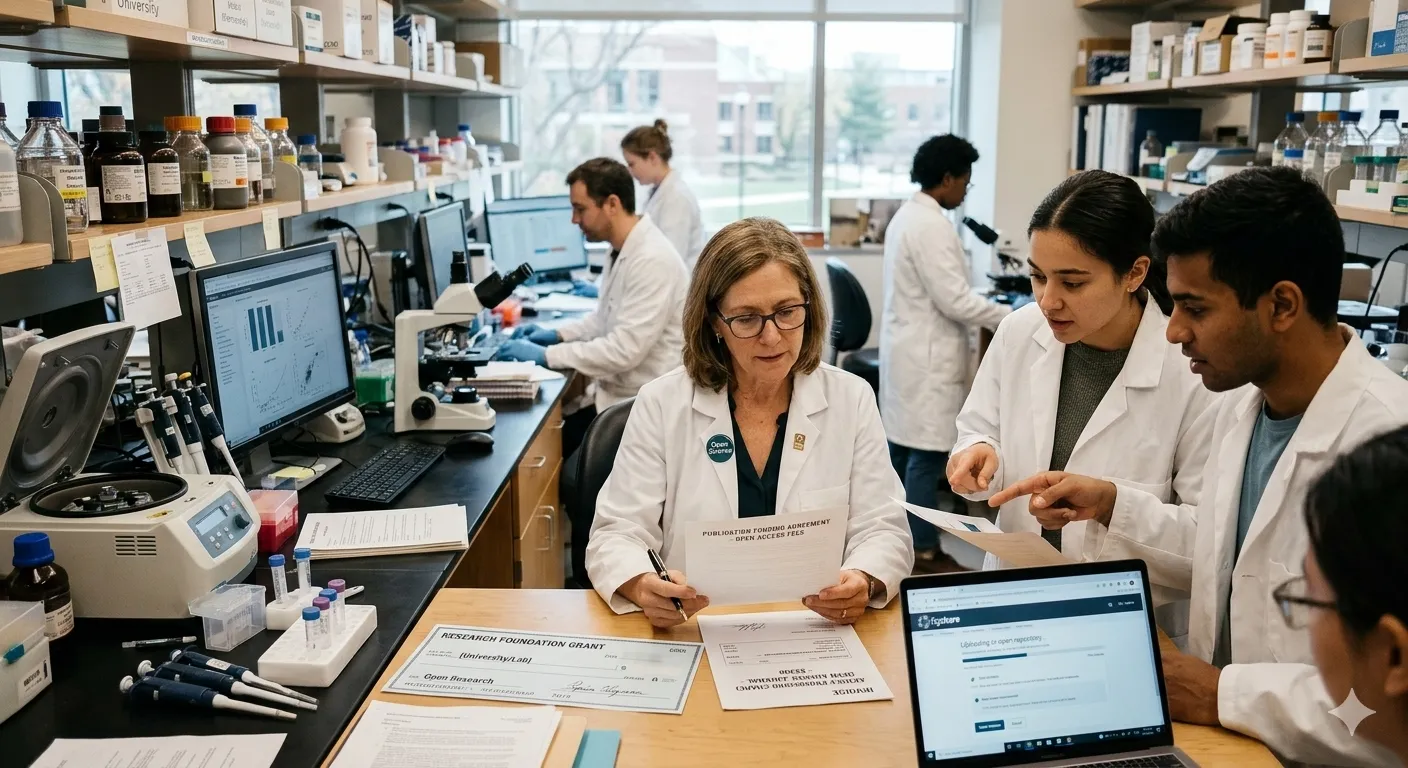
Sharing data sounds free until you try it. Cleaning a dataset, writing documentation, hosting files for years and answering emails from strangers all take hours that someone has to pay for. That’s the quiet cost behind every open paper, and behind post-publication peer review reflected in SciWard monetary scores, where strangers check published work for free. A realistic view of openness starts with the labor, not the slogan. This article looks at what it costs, who carries the bill, and which models try to spread the load more fairly, including SciWard, which rewards sharing directly.
The Hidden Labor
Opening up a project means more than uploading a file. Someone writes a README, names columns sensibly, checks that the code still runs on another machine, and fixes the bug a stranger report at midnight. Most grants don’t include a line for any of this. Researchers absorb it on weekends. Over time, that unpaid effort teaches people that closed, quick publishing is the safer career move, and the supply of well-documented work shrinks. Careers bend toward whatever gets rewarded, and openness rarely is.
Subscriptions and Paywalls
Universities pay large subscription fees so their staff can read journals, while many readers outside universities hit a paywall. Some journals flipped the model and charge authors instead, which moves the barrier onto people who can’t cover the fee. Neither setup is neat. Independent researchers, small colleges and scientists in lower-income countries feel the squeeze from both directions, and the price of access quietly sorts out who gets to join the conversation. Nobody planned that outcome, but the effect is the same as a gate.
Reproducibility Needs Maintenance
A result that can’t be repeated usually isn’t worth much. Reproducing research findings often requires shared code, well-organized data, and clearly documented methods. Those assets decay. Libraries update, links break, servers shut off. Keeping them alive is maintenance, the same kind that keeps bridges standing. Funders happily pay for new construction and forget the upkeep, so valuable resources slowly rot while everybody assumes somebody else is looking after them, and then one day they simply vanish. Maintenance is dull work, and dull work is easy to forget.
Where the Decentralized Idea Enters
Supporters of decentralized science argue that research shouldn’t depend on a handful of gatekeepers. They use shared ledgers, community votes and open records to decide who gets paid and to show where money went. The appeal is visibility, since anyone can inspect a transaction. The weak point is governance, because loose communities struggle to make careful decisions. Technology can record a payment, but whether it can also judge the work behind it has to be tested, not assumed. It’s a proven tool for one problem and an open question for another.
A Reality Check From SciWard
One project in this space has been honest about the trade-offs. SciWard records payments on-chain so they can be inspected, and it runs on a regular database with administrators in charge. It can in the near future hold a part of its long-term funds in a DAO. That candor is useful. It shows that transparency and decentralization are separate goals, and that choosing only the first can still be a sensible, reachable step for a small team. Nobody has to pretend a project is fully distributed to call it transparent.
Rewarding Shared Work Directly
Because the platform scores documented contributions, it can reward datasets, tools and open code alongside papers. That’s the interesting part for openness advocates. If sharing earns money rather than just goodwill, incentives tilt a little. Of course the scoring has to be tested, since any metric invites gaming. Public adversarial testing is meant to find those cracks before real money depends on the answer, and the plan runs for five months. That’s a modest claim, and probably a healthy one.
Practical Moves for Researchers
You can start without waiting for new systems. Deposit data with a persistent identifier, license your code clearly, and cite other people’s datasets the way you’d cite papers. Set aside some time to document your research, organize datasets, and explain your methods so others can understand and reuse your work. Join communities that review each other’s open materials. Small, boring habits like these make sharing cheaper for everybody, and they leave a visible trail that any future funding model can read. Nobody has to wait for permission, a budget or a committee to do any of it.
A Fair Price for Sharing
Openness is cheap to praise and costly to practice, so money has to meet the rhetoric somewhere. Agencies, publishers, donors and new community platforms all have a role, and none of them has solved it. SciWard rewards sharing directly: datasets, tools and open code can earn money, not just goodwill. If you want to follow one experiment trying to link rewards to visible work, take a look at science-dao.org and read the testing notes. Sharing should never be a penalty. Good systems turn it into an advantage that people notice. That’s the only version worth building.